

One of the first real decisions you make about university life in Exeter is where to live, and for most students it comes down to two options: university halls or private purpose-built student accommodation. Both work, and plenty of students are happy in either. But they differ in ways that matter day to day, from what your rent actually covers to how long you are tied in and how far you walk to a lecture. This guide compares the two honestly so you can work out which suits you.
In short: university halls are the default for first years and are good for meeting people, but places are limited and allocated. Private purpose-built accommodation gives you more choice over room type and location, usually with all bills included and better facilities. Compare the total weekly cost with bills, not the headline rent.
What are university halls in Exeter?
University halls are owned or managed by the University of Exeter and are the traditional first-year option. They sit on or near the Streatham and St Luke’s campuses, and they are designed to get new students settled quickly, with a mix of catered and self-catered options and a built-in community of other first years.
The main limitation is availability and control. Places are limited and allocated rather than chosen, so you may not get your preferred hall, room type or location. Most students move out after first year, which is why the private market in Exeter is so active from second year onwards.
What is private student accommodation?
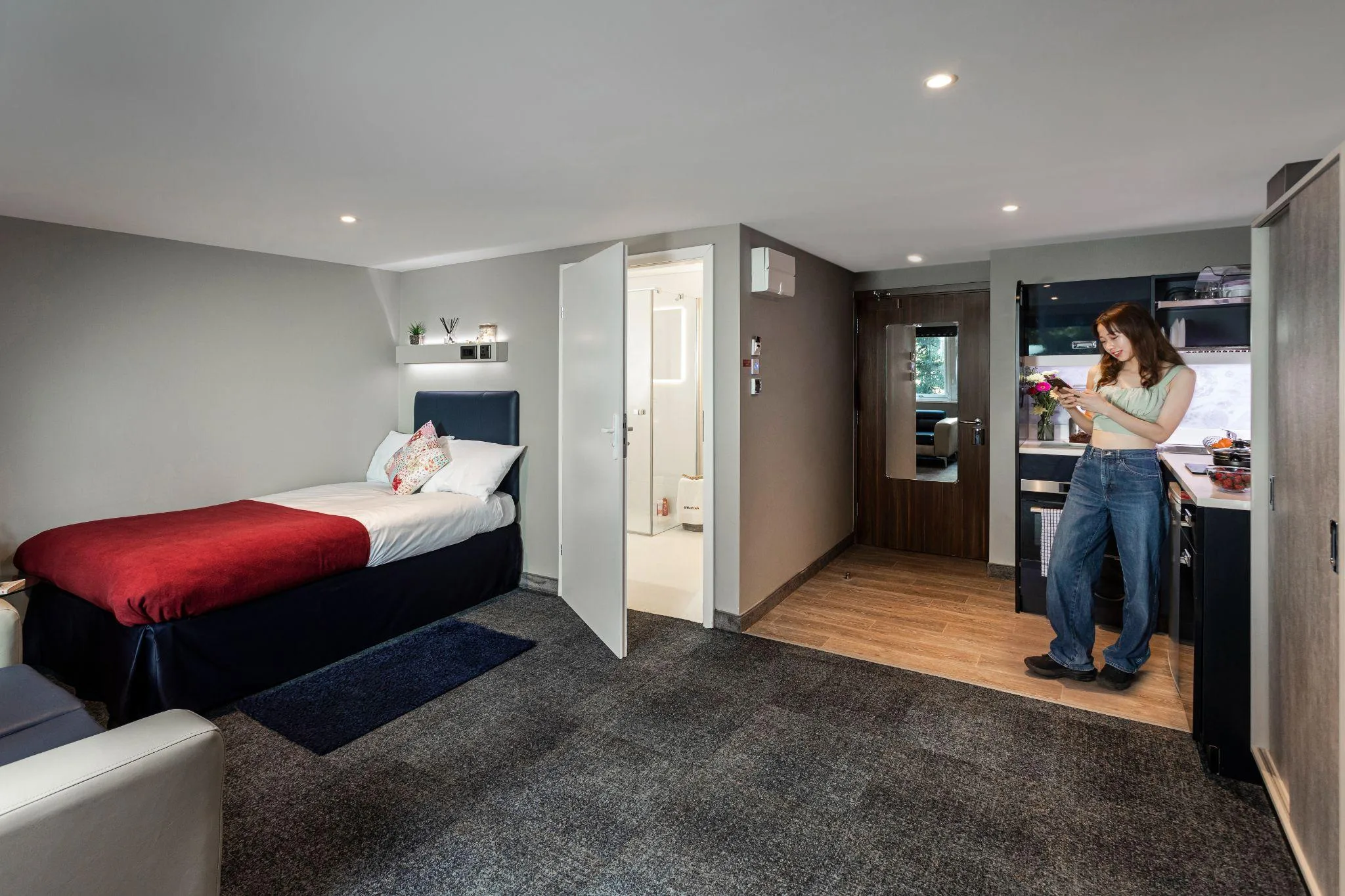
Private purpose-built student accommodation, often shortened to PBSA, is run by specialist providers rather than the university. These are managed buildings of studios and en-suite rooms with on-site teams, secure entry and shared social and study spaces. You choose the building, the room type and the price point rather than being allocated one.
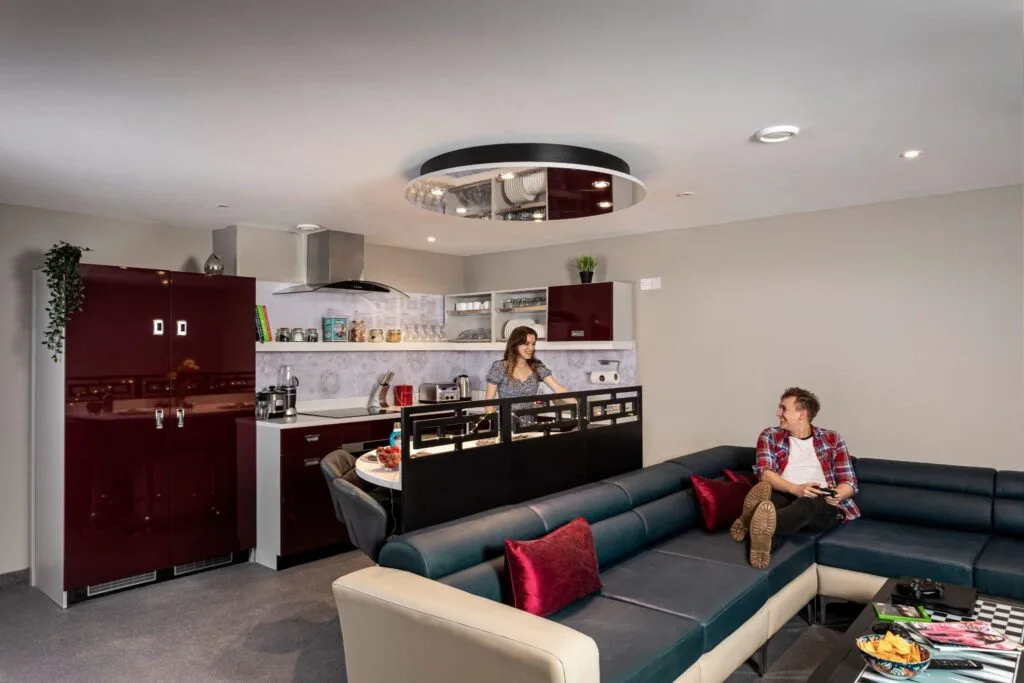
PBSA is open to first years as well as returning students, which surprises some people. If you did not get the hall you wanted, or you want more certainty about what you are getting, it is a genuine alternative rather than just a second-year option.
Cost: comparing like with like
This is where most students go wrong. Halls and private accommodation are often quoted differently, so comparing headline figures tells you very little.
The thing to compare is the total weekly cost with bills included. University halls typically include utilities, but check whether that extends to broadband and what the contract length is. Private all-inclusive accommodation bundles rent, all utility bills and Wi-Fi into one fixed payment, which makes budgeting far more predictable, particularly through winter when energy use climbs.
Also factor in what you would otherwise pay for separately: a gym membership, study space, laundry, contents insurance. If facilities are included, that is real money you are not spending elsewhere. Our guide to the cost of living in Exeter for students breaks down the wider budget.
Contracts and flexibility
Contract length is one of the biggest practical differences and one of the easiest things to overlook. University halls contracts usually run to the academic year, which means you are not paying for a room you are not using over the summer.
Private contracts vary. Some run the academic year, others a full 44 or 51 weeks. Neither is automatically better: a longer contract costs more overall but means you can leave your things there and come back, which suits students who work locally or do not want to move belongings home. What matters is checking the dates and the cancellation policy before you sign, particularly the clause covering what happens if your university place changes.
Location and getting to campus
Exeter is compact, which works in your favour whichever you choose. The University of Exeter has two main campuses: Streatham, the larger one, sits uphill from the city centre and houses most undergraduate departments, while St Luke’s is closer to the centre and home to education, sport and health sciences.
University halls are generally on or beside campus, so the walk to lectures is short. Private accommodation is often more central, which puts you closer to the shops, the nightlife and the two railway stations, Exeter Central and Exeter St Davids, for getting home at weekends. The trade-off is a slightly longer walk uphill to Streatham, though Exeter’s size means this is measured in minutes rather than a real commute. For more on the options, see our guide to getting around Exeter as a student.
Facilities and living space
Halls vary a great deal in age and standard, from modern blocks to older buildings, and you generally take what you are allocated. Rooms tend to be functional, with shared kitchens and bathrooms depending on the hall, though en-suite options exist.
Private accommodation is usually newer and built around shared facilities: gyms, study rooms, social spaces, cinema or movie lounges and wellness areas. Rooms are typically en-suite or full studios, so you get your own bathroom and often your own kitchenette. If having your own space matters to you, or you want a proper desk and a quiet place to work, this is where the difference shows.
Social life: which is better for meeting people?
This is the strongest argument for halls, and it is a fair one. Being surrounded by other first years going through exactly the same thing at the same time makes meeting people almost automatic, and many students form their closest university friendships in first-year halls.
Private accommodation can be just as social, but it works differently. Good buildings run events and are designed around shared lounges and social spaces, and you are living alongside students from all years and all the courses. Some people prefer that mix. If you are worried about it, look for a building with genuine communal space and an events programme rather than just a corridor of rooms.

Which should you choose?
Choose university halls if you are a first year who wants the classic experience, values being surrounded by other new starters, and is happy to accept the room you are allocated in exchange for simplicity.
Choose private accommodation if you want to choose your room type and location, you want your own en-suite or studio, you value facilities like a gym and study rooms, or you missed out on your preferred hall. It is also the more common route from second year onwards, when most students leave halls.
Either way, compare the total weekly cost with bills, check the contract dates and cancellation terms, and be honest about how much space and quiet you need to work well.
Walnut Gardens: Study Inn in Exeter
Study Inn’s Exeter property, Walnut Gardens, is a central, all-inclusive option around a 12-minute walk from the University of Exeter, or roughly 5 minutes by bike. It was voted the #1 best student accommodation in Exeter by Student Crowd in 2025.
Everything is all-inclusive: all utility bills and superfast Wi-Fi are covered, there is no damage deposit and no UK guarantor is required, and there is a 24-hour on-site team with CCTV and secure key-card entry. Residents have access to a wellness spa with sauna, steam room and hot beds, a fully equipped gymnasium, a garden, a movie lounge, a yoga studio, a Smart TV in every bedroom, a dedicated housekeeper, a concierge and parcel collection service, key-card lockable fridge and cupboards, study rooms, an entertainment area, an entertainment area and a pool table, plus housekeeping, a postal service and regular social events. Study Inn was named Best Student Accommodation Operator at the RESI Awards 2026.
For a wider comparison of the Exeter market, read our guide to student accommodation in Exeter versus luxury student accommodation.
Frequently Asked Questions
Is private student accommodation cheaper than halls in Exeter?
It depends on the room type and what is included. Halls can have a lower headline figure, but private all-inclusive accommodation bundles bills, Wi-Fi and facilities into one payment. Always compare the total weekly cost with bills included rather than the advertised rent alone.
Can first years live in private student accommodation in Exeter?
Yes. Private purpose-built accommodation is open to first years as well as returning students. It is a common choice for students who did not get their preferred hall or who want more control over their room type and location.
Are bills included in university halls in Exeter?
Halls typically include utilities, but you should check exactly what is covered, particularly broadband, and confirm the contract length. Private all-inclusive accommodation covers all utility bills and Wi-Fi in one fixed payment.
How far is student accommodation from the University of Exeter?
It varies by location. Halls are generally on or beside the Streatham and St Luke’s campuses. Study Inn’s Walnut Gardens is around a 12-minute walk from the University of Exeter, or roughly 5 minutes by bike, and sits centrally for the shops and both railway stations.
Do I need a UK guarantor for private accommodation in Exeter?
Many private providers require one, but Study Inn does not, including for international students. Always check the requirement before committing, as it can be a deciding factor for families based overseas.