

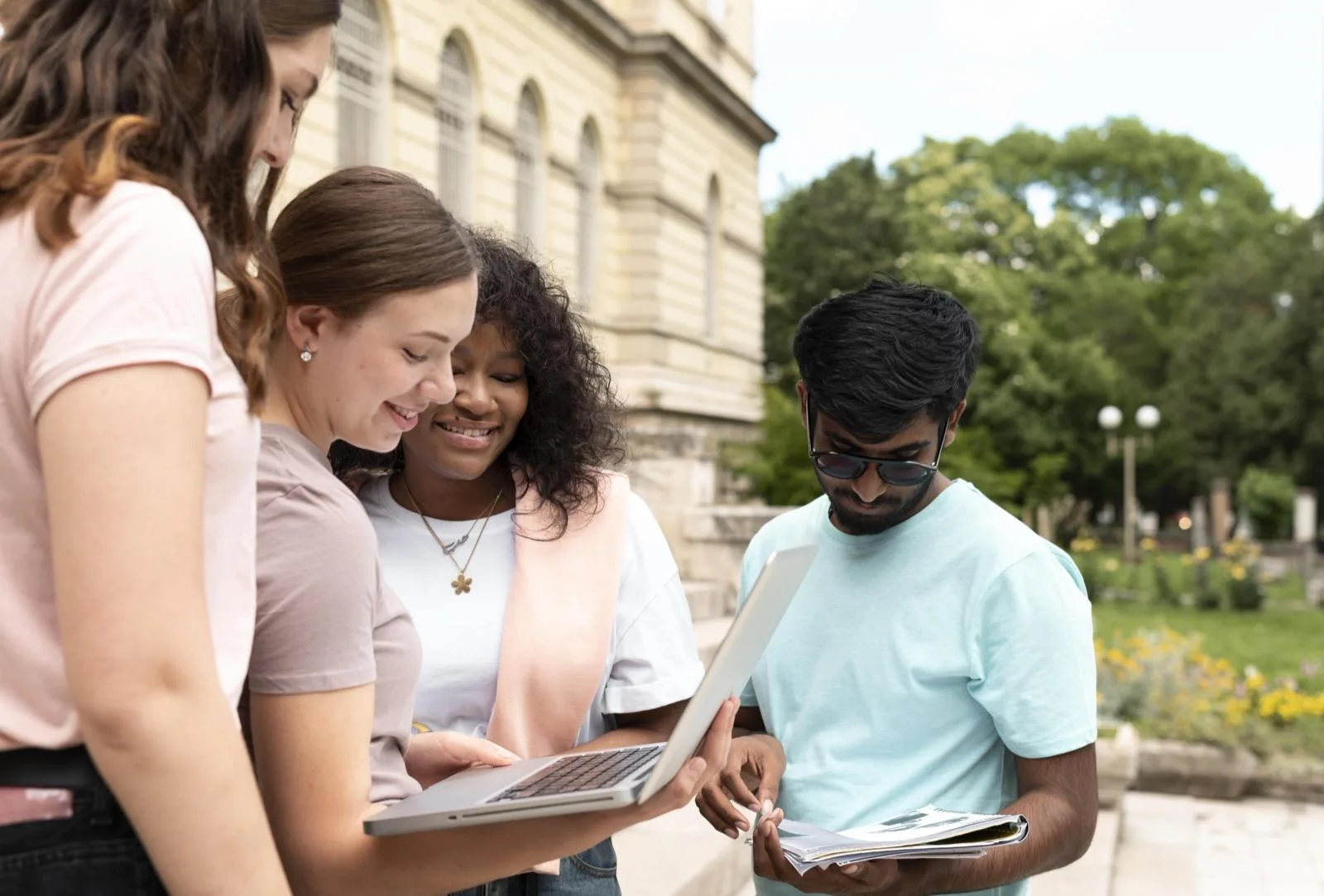
Birmingham is one of the UK’s largest student cities and one of its most international. It has several universities within a few miles of each other, a notably young and diverse population, and a cost of living below London and the South East. For students arriving from abroad, that combination makes it a practical choice as well as an appealing one. This guide covers what you need to sort out before you arrive and in your first few weeks.
In short: Birmingham has strong universities, good transport links into the rest of the UK and to two airports, a lower cost of living than London, and a genuinely international student population, so you are unlikely to feel like an outsider.
Why international students choose Birmingham
Birmingham is the UK’s second city, with a student population in the hundreds of thousands across its universities and colleges. It is also young and genuinely diverse: the 2021 Census put the city’s median age at 34, against 40 for England as a whole, and Birmingham is the only English core city where more than half of residents are from a Black, Asian, Mixed or other ethnic minority background. That scale and mix matters when you are arriving alone, because there are established communities from most parts of the world, societies for almost every nationality, and shops and restaurants that make it straightforward to find food from home.
It is also central. Birmingham sits roughly in the middle of England, which makes travelling to London, Manchester, the Lake District or Wales realistic for a weekend rather than a major expedition. For students who want to see the country they are studying in, that is a genuine advantage over somewhere further out.
The universities
The University of Birmingham is a Russell Group institution with a large campus in Edgbaston, a few miles southwest of the city centre, and a substantial international intake. Aston University sits on a compact campus right in the city centre and has a strong reputation for business and engineering alongside a notable placement-year culture.
Birmingham City University runs campuses across the city, including the City Centre campus in Eastside and a South campus on the Edgbaston side, with strengths in art and design, media and health. University College Birmingham specialises in hospitality, culinary arts and business and sits centrally. Newman University is smaller, in Bartley Green to the south-west.
Each has its own international office, and those offices are the single most useful resource you have before and after arrival. Use them. For more detail on each institution, see our guide to the universities in Birmingham.

Getting to Birmingham
Birmingham Airport sits about 8 miles east of the city centre and handles direct flights to much of Europe, the Middle East and beyond. The free Air-Rail Link people mover takes about 90 seconds from the terminal to Birmingham International station, and the train into Birmingham New Street takes around 15 minutes, which makes arrival with luggage considerably easier than in some cities. Allow extra for waiting, as trains run a few times an hour.
If you fly into London instead, Birmingham New Street is from about 1 hour 20 minutes from London Euston by direct train, and there are coach services from the London airports. Book trains in advance where you can, because walk-up fares are substantially more expensive.
Visas and what you need to arrive
Most international students come on a Student visa, which requires a Confirmation of Acceptance for Studies from your university, proof that you can cover tuition and living costs, and an English language qualification. Your university’s international office will guide you through the specifics, and their advice is more reliable than anything you read on a forum.
Bring the key documents in your hand luggage rather than your hold bag: passport, visa decision letter or eVisa details, CAS, offer letter, proof of finances, and your accommodation confirmation. You may be asked for some of these on arrival, and you will certainly need them in your first week.
Setting up: bank account and healthcare
Opening a UK bank account usually requires proof of identity, proof of address and a letter from your university confirming your student status and address. Most universities will issue that letter, so ask the international office in your first week, as the account takes a few days to open and you will want it early. Digital banks are often faster to set up and are a reasonable stopgap.
On healthcare, most international students pay the Immigration Health Surcharge as part of the visa application, which gives access to the NHS. Register with a local GP as soon as you arrive rather than waiting until you are unwell. Registration takes a few minutes and you will need proof of address and your student status. Your university will usually tell you which practices serve student areas.
Cost of living
Birmingham costs less to live in than London and the South East, which is one of the main practical reasons students choose it. Accommodation is the largest cost and varies by area and room type, with the city centre and Edgbaston generally higher than the outer student areas.
Beyond your accommodation cost, budget for food, transport, phone, course materials and a social life. Our guide to the cost of living in Birmingham for students breaks the main costs down. All-inclusive accommodation simplifies this considerably, because it removes the most unpredictable costs, energy in particular, from your monthly budget. If you are converting from another currency, build in some margin for exchange rate movement over the year. It is worth comparing what private accommodation and university halls each include before you decide.
Accommodation and the guarantor problem
This is the issue that catches most international students out. Many private landlords and some accommodation operators require a UK-based guarantor: someone resident in the UK who agrees to cover your accommodation cost if you do not. If you have just arrived in the country, you probably do not have one.
There are three ways round it. Some operators do not require a guarantor at all, which is the simplest answer. Some accept payment in advance instead. Others accept a paid guarantor service, which costs money but solves the problem. Ask the question before you fall in love with a building, because the answer varies between operators and it is a genuine dealbreaker.
University halls generally do not require a guarantor, which is part of why many international students choose them for a first year. For a wider view of what is available, see our guide to student accommodation in Birmingham.
Settling in
Arrive before Welcome Week if you can. The few days before term starts are when you register, collect your BRP or confirm your eVisa, open a bank account, register with a GP and find your way around, and doing all of that while also attending lectures is unnecessarily stressful.
It is also worth knowing which areas of Birmingham suit students before you commit to a postcode. Join things early. Societies are the easiest route into a social life, and most universities run an international students’ society alongside national and cultural societies. The first two weeks are when everyone is looking for people to talk to, so it is the easiest moment to start.
Study Inn is coming to Birmingham
The guarantor problem above is exactly where Study Inn differs from most operators. At Frederick Road, its Birmingham property opening in September 2027, there is no UK guarantor required and no damage deposit, so arriving from abroad does not put you at a disadvantage before you have even landed. Study Inn was named Best Student Accommodation Operator at the RESI Awards 2026, and has also won Best Student Experience in Accommodation and a Best Resident Well-being Programme award.
Frederick Road offers studios and en-suite apartments arranged around a shared Luxe Lounge, with a gym, a wellness spa, study rooms and areas, an entertainment area and Social Space 360. It is well placed for the University of Birmingham, around 8 minutes by bus or 10 minutes by bike, and for Birmingham City University’s South Campus, around a 10-minute walk. Everything is all-inclusive, covering all utility bills and superfast Wi-Fi, with CCTV, a 24/7 onsite security team and key-card building entry. To be first to hear about rates and exclusive offers, register your interest in Frederick Road.
Frequently Asked Questions
Is Birmingham a good city for international students?
Yes. It has several strong universities, one of the most diverse populations in the UK, a cost of living below London, and an airport with direct flights to much of the world. The size of the international student community means established societies and support networks already exist.
Do I need a UK guarantor for student accommodation in Birmingham?
It depends on the provider. Many private operators require one, which is difficult if you have just arrived. Some do not require a guarantor at all, and others accept payment in advance or a paid guarantor service. University halls generally do not require one. Study Inn does not require a UK guarantor.
How far is Birmingham Airport from the city centre?
About 8 miles east as the crow flies. The free Air-Rail Link people mover connects the terminal to Birmingham International station in about 90 seconds, and the train into Birmingham New Street takes around 15 minutes, which makes arriving with luggage straightforward.
Can I work while studying in Birmingham?
Most Student visas permit a limited number of hours of work during term time and more during holidays, but the limits are set by your visa conditions and you should check yours rather than assume. Your university’s international office can confirm what applies to you.
When should I arrive in Birmingham?
A few days before Welcome Week, if your visa allows. That gives you time to register with your university, sort a bank account, register with a GP and find your way around before lectures begin.