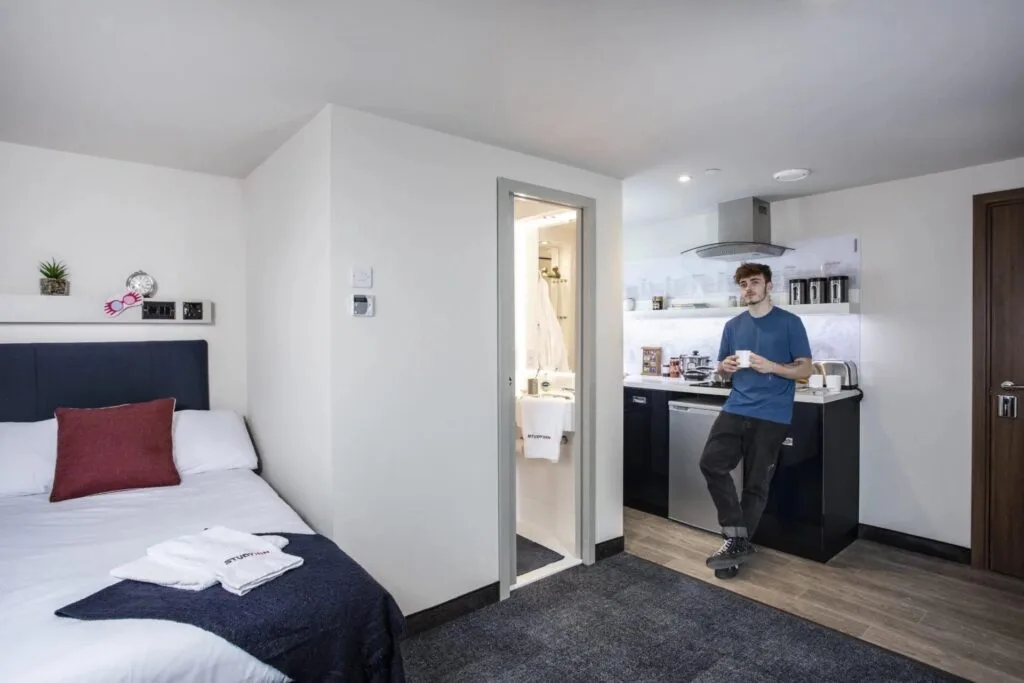


Moving out of halls is a rite of passage. After a first year with everything arranged for you, choosing your own second-year accommodation is your first real taste of independent living, and it comes with genuine decisions about who you live with, where, and what you are actually paying for. Get it right and you set yourself up for a settled, affordable year. Get it wrong and you can end up locked into a long contract, splitting unexpected bills, or living too far from campus. This guide walks you through your options and exactly what to check, so you choose somewhere you will be happy to call home.
In short: when choosing second-year accommodation, compare the true weekly cost with bills included rather than the headline rent, and decide between a private house share and all-inclusive purpose-built accommodation. Always check the contract length, the deposit and any UK guarantor requirement before you sign.
The second-year shift
In first year, halls do the organising for you: bills are usually bundled in, contracts are short, and everything is set up before you arrive. From second year, you are the one comparing options, reading contracts and budgeting for bills. It sounds daunting, but it is also a chance to live somewhere that genuinely suits how you study and socialise, with the people you choose. The trick is to weigh convenience, cost and comfort properly, rather than simply signing for the first house your group finds in a panic during first term.
Your options: house shares vs purpose-built accommodation
Most second years choose between a private house share and purpose-built student accommodation (PBSA). A house share can have a low headline rent and the appeal of living with a set group of friends, but bills are usually charged on top, a UK guarantor is often required, contracts frequently run a full twelve months including summer, and the standard and management vary a lot from landlord to landlord. PBSA studios and en-suite rooms cost more per week but are typically all-inclusive, professionally managed, secure and central, with on-site teams and shared study and social spaces. Our comparison of private accommodation versus university halls is a helpful starting point for weighing it up.
What to check before you sign
- Are bills and Wi-Fi included, or charged on top of rent?
- Is a damage deposit or a UK guarantor required?
- How long is the contract, and does it run over summer when you may be away?
- How close is it to campus, and what are the transport links and the walk home at night?
- Is there an on-site team, secure entry and proper, responsive maintenance?
- What is the total weekly cost with bills included, not just the advertised rent?
Why all-inclusive suits second years
The most common second-year headache is bills: splitting them, chasing housemates who are slow to pay, and watching them spike in winter. All-inclusive accommodation removes that entirely, bundling rent, all utilities and superfast Wi-Fi into one predictable payment. That makes budgeting simple, removes a frequent source of friction between friends, and means no nasty surprises when energy prices rise. To understand exactly what the term should cover before you commit, read our guide to student accommodation with bills included.
Living with friends: what to agree first
Second year is often the first time you choose your housemates, and a little honesty upfront saves a lot of tension later. Before you sign anything together, talk through budgets and what everyone can realistically afford, how bills and shared costs will be handled, study and sleep routines, and how you will divide cleaning and communal spaces. If your group has different budgets or lifestyles, all-inclusive studios or en-suite rooms in the same building can be a great compromise, giving everyone their own private, predictable space while still living alongside friends.

Common second-year mistakes to avoid
- Rushing to sign in the first few weeks of first year under pressure from letting agents.
- Comparing headline rents without adding bills, so the “cheaper” option ends up costing more.
- Committing to a big group before you know who you actually want to live with.
- Overlooking the contract length, the deposit terms and the cancellation policy.
- Choosing somewhere far from campus to save a little rent, then paying more in daily travel.
When to start looking
Second-year students often start looking far too early, pressured by letting agents, or far too late, once the best rooms are gone. There is a sensible middle ground. Our dedicated guide on when to look for second-year accommodation explains the ideal timing so you do not rush a decision or miss out on the best options.
Where Study Inn can help
Study Inn offers all-inclusive studios and en-suite rooms in central locations across the UK, with all bills and superfast Wi-Fi included, no damage deposit, no UK guarantor and a 24-hour on-site team. Our locations include:
• Leeds — Brotherton House
• Nottingham — Talbot Street and Triumph House
• Leicester — Reynard House
• Loughborough — Lemyngton Street
• Exeter — Walnut Gardens
• Birmingham — Frederick Road (opening soon)
Named the UK’s best student accommodation operator at the RESI Awards 2026, Study Inn keeps everything simple, secure and all-inclusive. Browse more accommodation advice for tips on settling into your second-year home.
Budgeting for your second year
Second year is when many students take full control of their money for the first time, so it pays to build a realistic budget before you sign anything. Start with the true weekly cost of your accommodation, including bills, then add food, travel, contents insurance, course materials and a little for socialising. If you are comparing a house share with all-inclusive accommodation, work out the house share’s cost with average bills added, not just the headline rent, so you are comparing like with like. Remember that energy use, and therefore bills, climbs through winter, which is exactly when a fixed all-inclusive payment protects your budget. Agreeing a shared approach to money with any housemates at the outset, and keeping a small buffer for unexpected costs, makes the whole year far less stressful.
Second-Year Accommodation FAQs
Is it cheaper to live in a house share or purpose-built accommodation in second year?
House shares can have a lower headline rent, but bills are charged on top and can be unpredictable. All-inclusive accommodation costs more per week but bundles everything into one payment, which is more predictable and can be comparable once bills are added. Always compare the total weekly cost with bills included.
Do I need a guarantor for second-year accommodation?
Many house shares and providers require a UK guarantor, but Study Inn does not, including for international students. Always check the requirement before you commit, as it can be a deciding factor.
How is second-year accommodation different from halls?
In halls, bills are usually bundled in and everything is set up for you on a short contract. From second year you compare options and read contracts yourself, so check whether bills and Wi-Fi are included, the contract length, and any deposit or UK guarantor before you sign. All-inclusive accommodation keeps things closest to the simplicity of halls.
What should I check before signing a second-year tenancy?
Check whether bills and Wi-Fi are included, whether a deposit or guarantor is required, the contract length and whether it covers summer, the distance to campus, and whether there is an on-site team and secure entry.
Is it worth moving out of halls in second year?
Most students do move on after first year, and it gives you more choice over where and how you live. Whether you pick a house share or all-inclusive studios and en-suite rooms, the key is to compare true costs and read the contract carefully.