

Most students arriving in Birmingham face the same choice: a room in university halls, or a room in a private purpose-built building. Both are legitimate, and the right answer depends on what you want from your first year rather than on which is objectively better. This guide sets out how the two compare in Birmingham specifically, on the things that actually differ: cost, contracts, bills, facilities, location and who you end up living with.
In short: halls are the simpler default for a first year and put you among people in the same position, while private accommodation usually offers more space, better facilities and more predictable billing. The decision usually comes down to budget, how much you value your own space, and where you need to be each morning.
What university halls mean in Birmingham
Each Birmingham university runs its own halls. The University of Birmingham has a large stock around the Edgbaston campus and the Selly Oak side, Aston‘s are on its city-centre campus, and Birmingham City University has halls serving its City Centre and South campuses. Allocation usually happens through the university’s own accommodation portal after you firm your place, with first-year students generally given priority.
Rooms range from standard single rooms with shared bathrooms through to en-suite rooms, and catered options exist at some sites. The defining features are that the university is your landlord, the contract runs to the academic year, and you are surrounded almost entirely by other students from your own institution.
What private student accommodation means
Private purpose-built student accommodation is run by an operator rather than a university. In Birmingham these buildings cluster in and around the city centre, Selly Oak and the Jewellery Quarter, which puts them within reach of more than one campus.
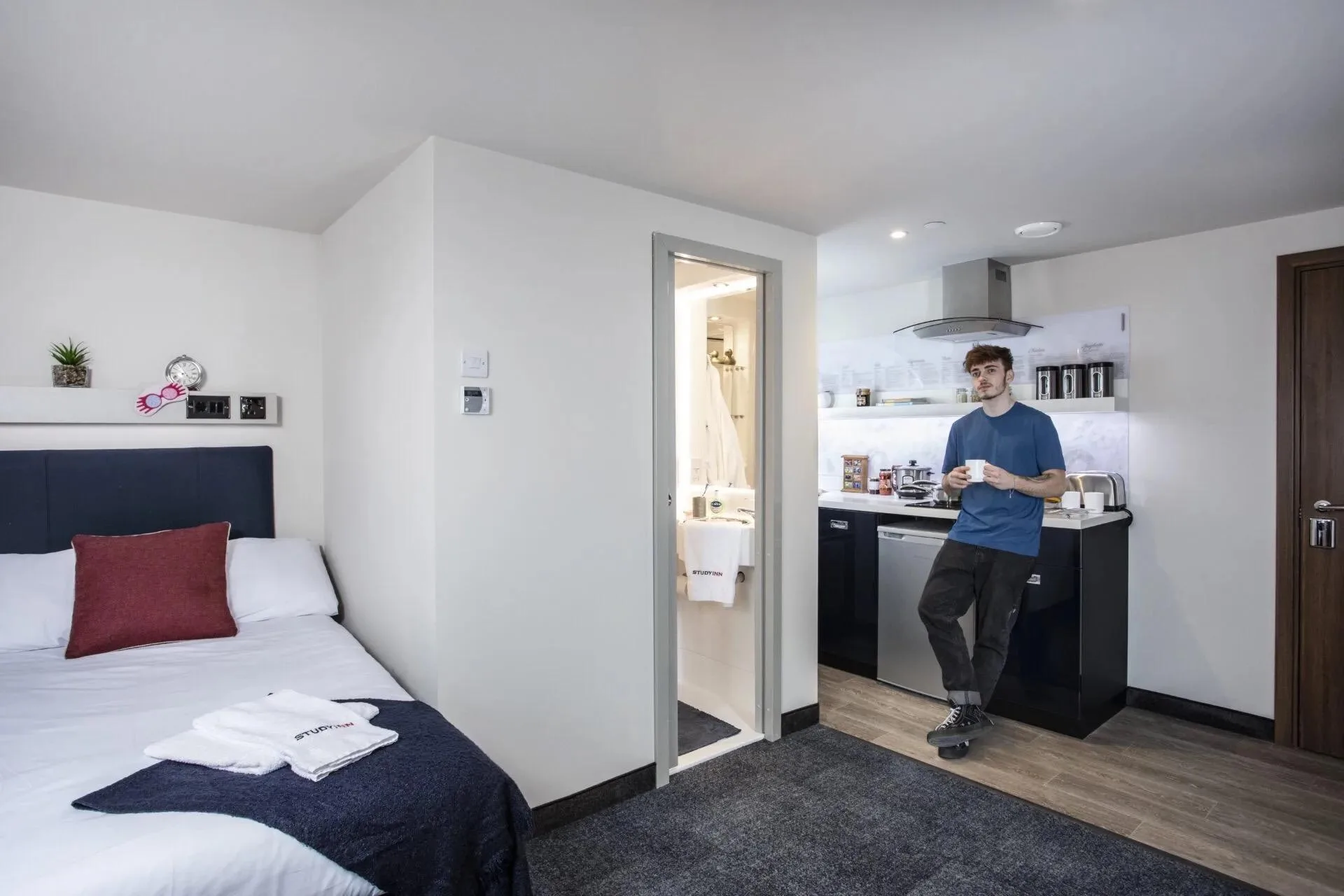
The rooms tend to be larger and more consistent than halls, with en-suite bathrooms as standard and studios available, and buildings are usually designed around shared facilities such as gyms, study rooms, social spaces and on-site staff. You are living with students from across the city’s universities rather than only your own.
Cost: comparing like with like
This is where most comparisons go wrong. A halls room and a private room are rarely the same product, so comparing the headline weekly cost tells you very little.
Check three things before you compare. First, what is actually included. Halls contracts normally include bills, but private buildings vary, and an all-inclusive accommodation cost that looks higher can work out lower overall than a smaller one plus utilities, Wi-Fi and contents insurance. Second, the contract length, because a 51-week contract at a lower weekly rate can cost more overall than a 44-week contract at a higher one. Third, the room type, since a studio with its own kitchen is not comparable to a standard room on a shared corridor.
Work out the total cost for the full contract, including everything you would have to pay separately, and compare those two numbers. Our guide to the cost of living in Birmingham for students covers what to budget for beyond your accommodation cost. That is the only comparison that means anything.
Contracts and flexibility
University halls contracts typically run to the academic year and are relatively standardised. Private contracts vary more: some run to the academic year, some to 51 weeks, and summer arrangements differ between operators. Our guide to moving out of halls covers what to check before you sign anything.
The guarantor question below affects international students most of all. The practical questions are the same either way. When does the contract start and end? Can you stay over the Christmas and Easter breaks without paying extra? What happens if your circumstances change? And is a UK guarantor required? That is a significant question for international students, since many private operators require one and some do not.
Bills and what is included
Halls almost always include bills in the accommodation cost, which is part of their appeal: one payment, no meters, no splitting bills with flatmates.
Private accommodation varies, and this is worth checking carefully rather than assuming. We explain this in full in our guide to all-inclusive student accommodation. All-inclusive usually means gas, electricity, water and broadband, but the detail matters, so check whether there is a usage cap on energy, what the Wi-Fi speed actually is, and whether contents insurance is included or something you arrange yourself.
Facilities
This is the clearest practical difference. Halls facilities vary widely by site and by age of building, and tend to cover the essentials: common rooms, laundry, sometimes a small gym.
Private buildings are generally built around their facilities, because that is part of what you are paying for. A gym, study rooms, social and games spaces, and on-site staff are common. A dedicated study room matters more than most students expect, particularly in exam season when campus libraries fill up. If you would otherwise pay for a gym membership, that is a real saving to factor into the cost comparison rather than a nice extra.
Location and getting to campus
In Birmingham this matters more than in a smaller city, because the campuses are genuinely spread out. The University of Birmingham sits in Edgbaston, a few miles south west of the centre. If you are still deciding between institutions, our guide to the universities in Birmingham sets out where each campus sits. Aston and Birmingham City University’s City Centre campus sit in or next to the centre itself, and BCU also has a South campus on the Edgbaston side.
University halls put you close to your own campus, which is the single biggest advantage if you have early starts. A central private building can be well placed for several campuses at once, which matters if you want the city on your doorstep or if you are sharing with people studying elsewhere. Our guide to getting around Birmingham as a student covers the options. Check the actual journey rather than the map distance, because the cross-city rail line and the bus corridors make some journeys much faster than they look.
Who you live with
Halls put you among first years from your own university, almost all in the same position as you. That makes the first few weeks socially easier, and it is the strongest argument for halls in a first year.
Private buildings mix students from different universities and different year groups, including postgraduates. Some people prefer that, particularly in second year and beyond when the novelty of a corridor of first years has worn off. Buildings with organised social events bridge the gap, so it is worth asking what actually runs rather than assuming.
Which suits you?
Choose halls if it is your first year, you want the simplest possible setup, you want to be among people from your own course and university, and you want one contract that covers everything.
Choose private accommodation if you want your own space and a reliable standard of room, you will use the facilities, you want to live centrally or with people from more than one university, or you are coming back for a second year and already know the city.
Neither is a mistake. The thing that actually causes regret is choosing on the headline weekly cost alone without checking what is included and how long the contract runs.
Study Inn is coming to Birmingham
If the comparison above leaves you leaning towards private accommodation, Study Inn is worth knowing. Study Inn was named Best Student Accommodation Operator at the RESI Awards 2026, and its Birmingham property, Frederick Road, opens in September 2027.
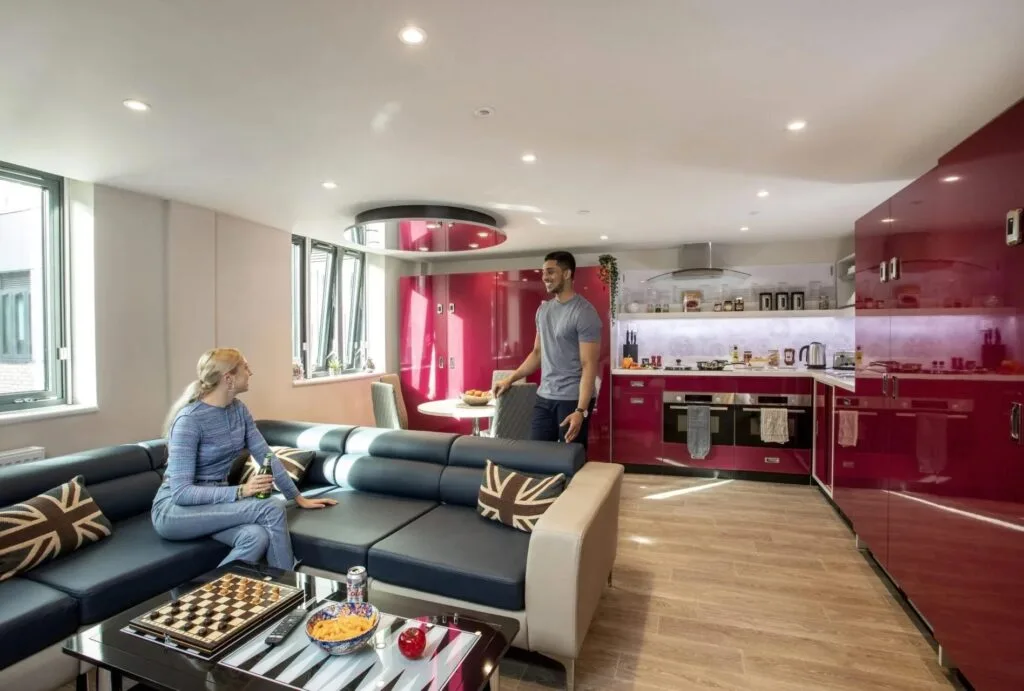
It answers most of the objections students raise about private buildings. Studios and en-suite apartments are arranged around a shared Luxe Lounge, so you get your own space without losing the social side that makes halls appealing. A gym, wellness spa, study rooms and areas, an entertainment area and Social Space 360 are all on site and included, rather than extras you pay for separately.
It is well placed for the University of Birmingham, around 8 minutes by bus or 10 minutes by bike, and for Birmingham City University’s South Campus, around a 10-minute walk. Everything is all-inclusive, covering all utility bills and superfast Wi-Fi, with CCTV, a 24/7 onsite security team and key-card building entry, no damage deposit and no UK guarantor required. To be first to hear about rates and exclusive offers, register your interest in Frederick Road.
Frequently Asked Questions
Is private student accommodation more expensive than halls in Birmingham?
Not necessarily, and the headline weekly cost is a poor guide. Compare the total cost across the whole contract, including bills, Wi-Fi and anything else you would pay separately. An all-inclusive private accommodation cost can work out similar to or less than a lower halls cost once everything is counted.
Can first-year students live in private accommodation in Birmingham?
Yes. There is no rule requiring first years to live in halls, and plenty of first years choose private buildings. Halls are the more common default because allocation runs alongside your university offer, but the choice is yours.
Do I need a UK guarantor for private accommodation?
It depends on the operator. Many require a UK-based guarantor, which can be difficult for international students, but some do not. It is worth checking before you get attached to a building. Study Inn does not require a UK guarantor.
Which is better for making friends?
Halls have the edge in a first year, because everyone around you is new at the same time. Private buildings mix year groups and universities, which suits some people better, and those with organised social events close most of the gap.
How far are Birmingham’s universities from the city centre?
Aston and Birmingham City University’s City Centre campus are in or beside the centre. The University of Birmingham is in Edgbaston, a few miles south west, and is well served by the cross-city rail line and frequent buses. BCU’s South campus sits on the Edgbaston side too.