

Working in the same room every day gets old quickly, and by second term most students have worked out that where you study affects how much you actually get done. Birmingham is well suited to moving around: it has several universities with substantial libraries, a compact centre, a strong independent café scene across Digbeth and the Jewellery Quarter, and a handful of quiet public spaces that students tend to overlook. This guide covers the best study spots in Birmingham, what each is genuinely good for, and when to use them.
In short: use the university libraries when you need to concentrate properly, independent cafés for reading and group work, the city’s public libraries and cultural spaces when the campus libraries are full, and your own accommodation’s study rooms when the barrier to starting is simply leaving the house.
University libraries
Birmingham’s universities run libraries that open long hours in term time, and for work that needs real concentration they remain the strongest option. The University of Birmingham‘s main library sits on the Edgbaston campus and is the one most students mean when they say “the library”, with extended hours during assessment periods. Our guide to the universities in Birmingham sets out where each campus sits. Aston University and Birmingham City University both run their own libraries on their city-centre campuses, and University College Birmingham has its own provision in the centre too.
The value of a university library is not only the quiet. Everyone around you is working, the desks are designed for long sessions rather than a quick coffee, the Wi-Fi holds up, and you have the collections and the subject librarians when you need them. The catch is availability: during exam season seats go early and stay taken all day. Most universities run seat-booking systems, and using them is the difference between a productive morning and half an hour walking between floors.
Best for: deep focus, dissertation work, anything with a deadline.

The Library of Birmingham
The Library of Birmingham in Centenary Square is free, central and open to everyone, and it is used by far fewer students than it should be. No student card required. It has floors of seating, good natural light and a genuine mix of people working, which some students find easier to settle into than the silence of a campus library. Check the opening hours before you go: the full library runs from 11am, with a shorter express service covering the lower floors from 9am, and it is closed on Sundays.
It is a real alternative when the university libraries are heaving in May, and it is well placed if you are in the centre between lectures rather than out at Edgbaston. The upper floors and terraces are quieter than the ground floor, which handles most of the footfall.
Best for: quiet work when the campus libraries are full, and a change of scene that costs nothing.
Independent cafés
Birmingham’s independent café scene is strong and, helpfully, spread across the parts of the city students actually spend time in rather than concentrated in one quarter. Digbeth has a run of independents attached to the creative businesses in the area, and they tend to be relaxed about laptops outside the lunch rush. The Jewellery Quarter is the other obvious base, with small places on and around the main streets that stay quiet during the working day. Closer to campus, Selly Oak and Harborne, two of the best areas to live in Birmingham as a student, both have cafés that fill with students in the afternoons without ever feeling packed.
Some practical notes. Buy something every hour or so if you are settling in. Most independents are relaxed about laptops, but they are running a business and the goodwill is worth keeping. Scout for plug sockets before you commit to a table. And be realistic about what background noise does to your particular work: café chatter suits reading, planning and note-taking far better than it suits writing or anything mathematical.
Best for: reading, planning, group work, and tasks that benefit from a bit of ambient noise.
Civic and cultural spaces
Beyond libraries, Birmingham’s cultural venues have public seating that works well for lighter work. The Birmingham Museum and Art Gallery area, the Symphony Hall and ICC foyers around Centenary Square, and the public spaces in the Bullring and Grand Central all have places to sit for an hour. None of these is a substitute for a proper desk when you have a deadline, but they are useful between lectures when going home is not worth the journey.
Best for: an hour of reading or admin between commitments.
Green spaces and outdoor study
On the few genuinely warm days, Cannon Hill Park is the obvious choice, with plenty of open grass and benches, and it sits within easy reach of Edgbaston and the southern student areas. Getting there is straightforward once you know your options for getting around Birmingham as a student. The Birmingham Botanical Gardens nearby are quieter if you want to be properly away from campus. Centrally, Eastside City Park and the canal towpaths around Brindleyplace give you somewhere to sit without leaving the centre.
Outdoor study works far better for reading and revision by hand than for anything involving a screen, between glare and battery life. Bring paper.
Best for: reading, handwritten revision, and clearing your head between sessions.
Studying in your accommodation
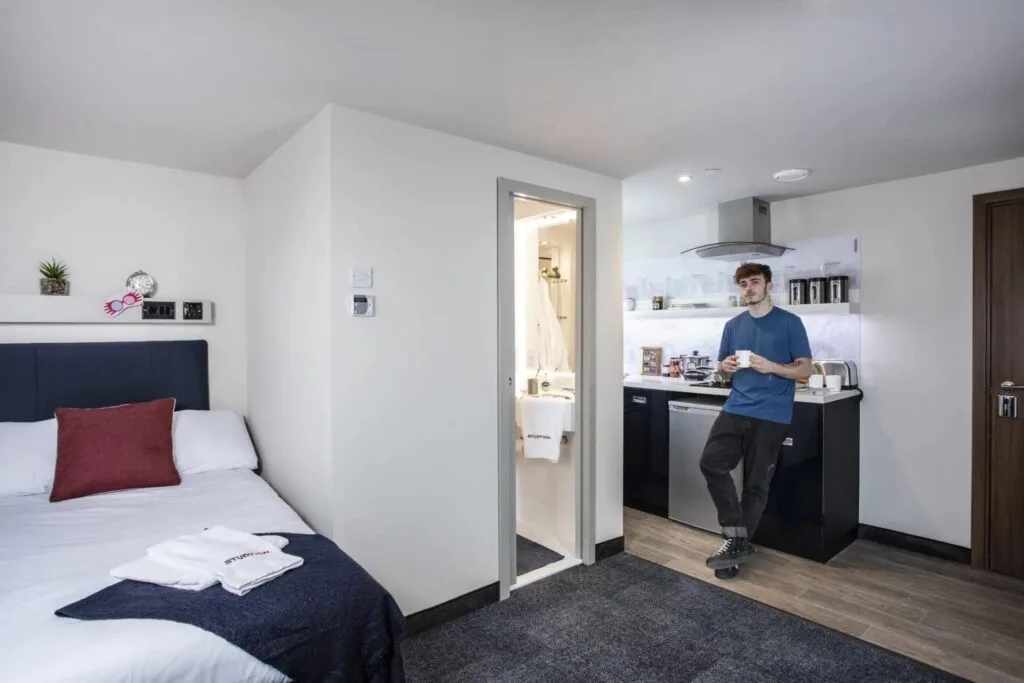
The study space you end up using most is the one you do not have to travel to. Purpose-built student accommodation increasingly includes dedicated study rooms for exactly this reason: a bedroom desk is a poor place to spend eight hours, and shared kitchens and lounges are too sociable for work that needs focus.
If you are weighing up where to live, our guide to student accommodation in Birmingham covers the options. The advantage of study space in your own building shows up in January, when the walk to campus in the rain is the only thing between you and starting. A study room in your own building removes that friction completely, and if it is open around the clock it also covers the late evenings after the university libraries have closed.
Best for: early mornings, late nights, bad weather, and any day when getting out of the door is the hard part. If you are comparing buildings on this, it is worth weighing private accommodation against university halls before you commit.
How to choose the right spot for the task
Match the place to the work rather than to your mood. Difficult work that needs sustained concentration belongs in a library, where the silence and the surrounding focus genuinely help. Reading, planning and admin survive café noise perfectly well. Group work needs somewhere you can talk without irritating anyone, which rules out silent library floors and points towards a bookable study room or a café with a big table.
Two habits matter more than the venue: decide what you are going to do before you arrive, and set a finish time. A perfect café with no plan gets less done than an average desk with one.
Study Inn is coming to Birmingham
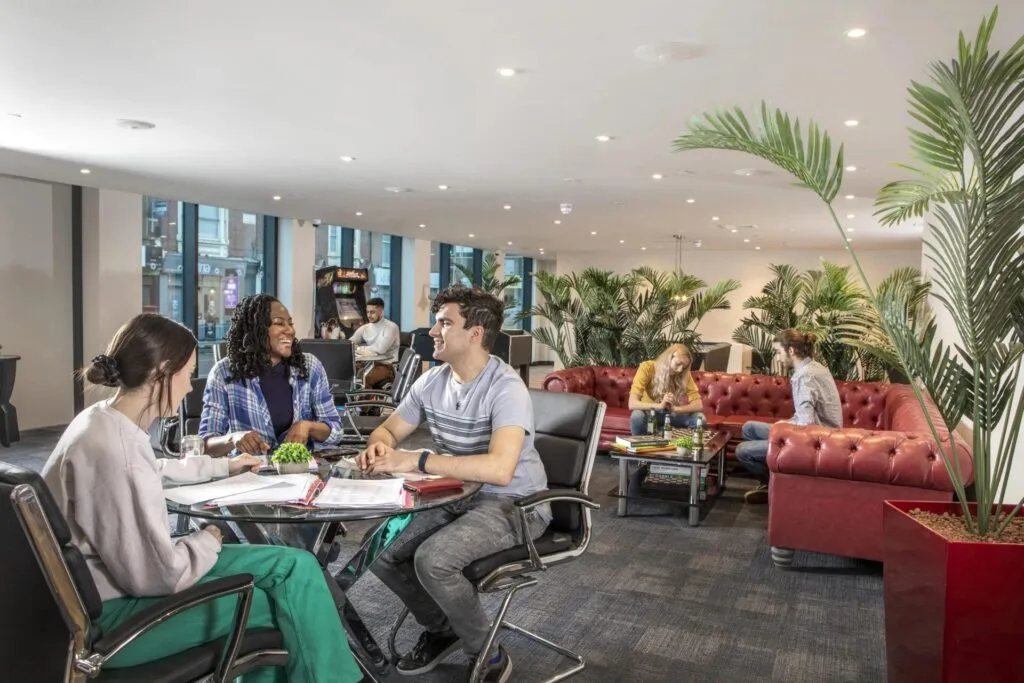
Most student accommodation gives you a desk in your bedroom and calls it a study space. Study Inn’s Birmingham property, Frederick Road, opening in September 2027, is built differently: there are dedicated study rooms and study areas on site, so you have somewhere to work that is not also where you sleep, without leaving the building. Alongside them sit a gym, a wellness spa, an entertainment area and Social Space 360.
Frederick Road is well placed for the University of Birmingham, around 8 minutes by bus or 10 minutes by bike, and for Birmingham City University’s South Campus, around a 10-minute walk. Everything is all-inclusive, covering all utility bills and superfast Wi-Fi, with CCTV, a 24/7 onsite security team and key-card building entry, no damage deposit and no UK guarantor required. To be first to hear about rates and exclusive offers, register your interest in Frederick Road.
Frequently Asked Questions
Where are the best places to study in Birmingham?
For focused work, the university libraries at the University of Birmingham, Aston and Birmingham City University are the strongest options for their own students. For a change of scene, the Library of Birmingham in Centenary Square is free, central and open to everyone, and the independent cafés in Digbeth and the Jewellery Quarter suit lighter work.
Is the Library of Birmingham free to use?
Yes. It is a public library, open to everyone, and you do not need a student card to sit and work there. Opening hours are shorter than a campus library, starting at 11am for the full service with an express service on the lower floors from 9am, and it is closed on Sundays. It is a genuine alternative when the university libraries are full during assessment periods.
Can you study in cafés in Birmingham?
Yes, and most independents are relaxed about it. Buy something regularly, avoid settling in over the lunchtime rush, and check for plug sockets first. Cafés suit reading, planning and group work better than work that needs deep concentration.
Where can I study late at night in Birmingham?
University libraries extend their opening hours during assessment periods, and some offer 24-hour access at peak times. Outside those periods, accommodation with its own study rooms tends to be the most reliable option, since it does not depend on opening hours or a journey home afterwards.
Is it better to study at home or go out?
It depends on the task and on you. Working at home saves travel time and is the realistic option in bad weather, but it needs a proper desk and a space that is not also where you relax. Going out creates a clearer line between working and not working, which many students find easier to keep to. Accommodation with dedicated study rooms sits between the two: a separate space to work without leaving the building.