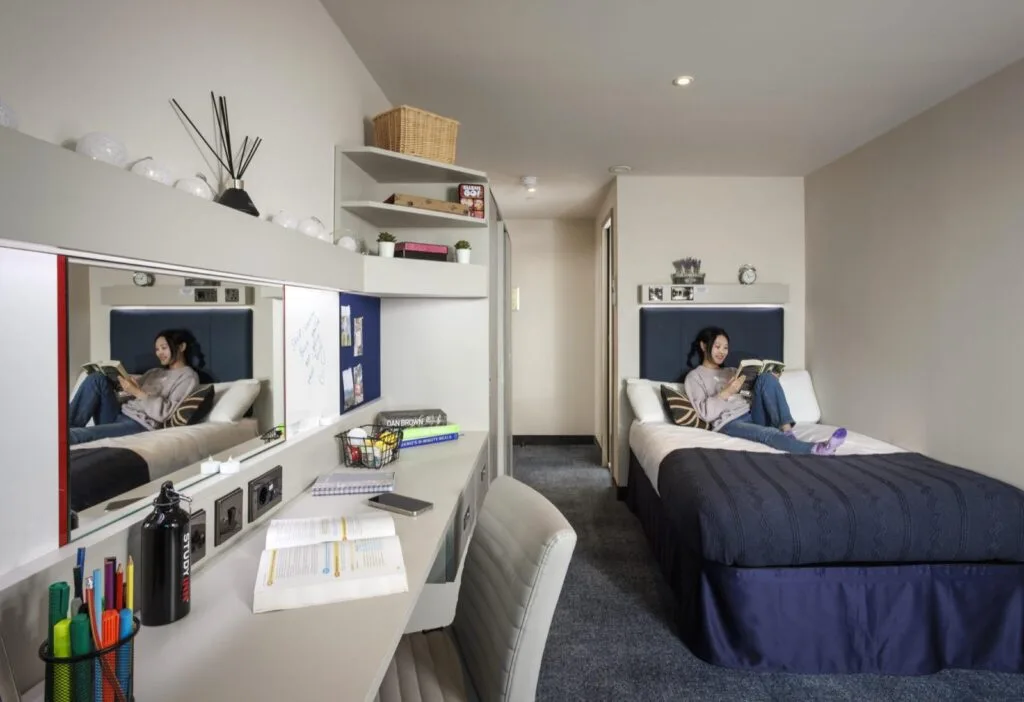


University gives you more freedom than you have probably had before. You decide when you study, when you go out, what you eat and when you sleep. Most students get the balance wrong at some point, usually in one of two directions: a lot of going out early in the year followed by a scramble before deadlines, or so much worry about work that they miss the social side of university altogether.
In short: balance at university means protecting a few fixed things, such as study time, sleep and time with other people, and being flexible about the rest. Plan your week around your timetable, choose a small number of social commitments you enjoy, keep the basics of self-care in place, and expect the balance to shift between busy and quieter points in the year.
What balance at university actually looks like
Balance does not mean splitting your time equally. Some weeks will be mostly study and others mostly social, and that is fine. What matters is that over a term nothing important disappears completely: your course, your health and your relationships with the people around you.
A simple check works well. In a typical week, are you keeping up with your course, sleeping enough to function, eating proper meals, moving your body and spending some time with other people? If one of those has dropped out for several weeks, something needs adjusting.
Start with the fixed points in your week
Put your timetabled lectures and seminars in first. Then add regular study blocks, then anything else that is fixed, such as a part-time job or a training session. What is left is your free time, and there is usually more of it than you expect.
Doing this once a week, on the same day each week, takes about ten minutes and saves a lot of last-minute stress. Use whatever you will actually look at: a paper diary, your phone calendar or a planner on your desk.
The aim is not to schedule every hour. It is to make sure the things that matter to you have a place in the week before other things fill it. If you find routines hard to stick to, our article on settling into the new student year has more on the first few weeks.
A social life that does not take over
The social side of university matters. Friendships made in your first year often last, and having people around you makes the harder weeks easier.
Freshers’ week and the first month bring a lot of invitations, and you do not have to say yes to all of them. Pick one or two societies or clubs that you enjoy and go regularly, rather than signing up for ten and going to none.
Not all socialising has to be a night out. Cooking with flatmates, a film night, a walk or a coffee between lectures all count. They cost less, and they do not wipe out the next morning. When you do go out late, plan around it: avoid the night before a 9 am or a deadline, and keep the following day light.
Saying no is part of balance. A friend who wants you there will understand if you need to finish an assignment, and there will be another night.

Self-care that is practical
At university, self-care is mostly about the basics rather than treats.
Sleep is the one that slips first. A consistent time to get up helps even when bedtimes vary, and it makes early lectures much easier.
Food comes next. A few simple meals you can cook in a batch, plus some fruit and vegetables, will keep your energy steadier than skipped meals and takeaways.
Then movement. A walk, the gym, a class or a sport all help with mood and concentration. Choose something you will keep doing rather than something you think you should do.
Time on your own counts too. Rest is not wasted time, and it is fine to have an evening in with nothing planned.
Finally, register with a GP near where you live when you arrive, so you are not trying to do it while you are ill. According to the NHS, you only need to give your name, date of birth and address, and you do not need ID or proof of address.

Money and part-time work
Money worries knock the balance off quickly. At the start of each term, write down what is coming in, your fixed costs, and what that leaves for each week. Accommodation that includes bills makes this easier, because one of the biggest costs does not change from month to month. Our guide to all-inclusive student accommodation explains what to check.
A part-time job helps with money and experience, but the hours add up. Before you take one on, work out how many hours you can give it without cutting into study time or sleep, and look for shifts that fit around your timetable. If you are on a Student visa, how much you can work depends on what you are studying and whether it is term time, so check the rules on GOV.UK before you agree to any shifts.
How the balance changes through the year
The right balance is different at different points in the year, so expect to adjust it.
At the start of term, the social side takes more time while you settle in and meet people. It is also the best time to set up your routines, before the work builds up. Our guide to preparing for your first year covers the practical side.
In the middle of term, deadlines start to bunch together. Protect your study blocks and cut back on late nights in the weeks before a hand-in.
In exam season, study rightly takes priority, but sleep, regular meals and short breaks matter even more. Our article on dealing with exam stress has more on this.
Over the holidays, rest properly. If you have exams or deadlines in January, plan some revision time before you go home rather than taking all your notes with you and hoping.
Signs the balance is off
Some signs are easy to spot. You are behind on work most weeks, or missing deadlines. You are tired most days, or sleeping much more or much less than usual. You are skipping meals. You are avoiding people, or you never get any time to yourself. You feel anxious or low most of the time.
If a few of these apply, step back and change one thing at a time, starting with sleep. If you have felt low or anxious most of the time for more than a couple of weeks, speak to your GP or your university’s wellbeing service. Our article on student wellbeing resources lists local services in each Study Inn city, and Samaritans can be reached free on 116 123 at any time, day or night.
How Study Inn makes balance easier
A lot of what eats into students’ time is admin and housework. At Study Inn, accommodation is all-inclusive, covering electricity, water, heating and superfast Wi-Fi, so there are no bills to split or meters to read. A regular cleaning service for your room and the communal areas is included, and so are bedding, towels and kitchen utensils.
Study Inn’s buildings in Leeds, Nottingham, Leicester, Exeter and Loughborough all have a gym, a wellness spa and study rooms or study areas, so the study and self-care parts of your week happen in the same building as your room. Social events run through the year, from fitness and yoga sessions to cooking lessons, craft classes and speed friending, so meeting people does not always have to mean a night out.
Support is close by too. The team is onsite 24 hours a day, Centre Managers run “Tea and Chat” drop-in sessions, and Study Inn won Best Resident Well-being Programme at the Best in Class Awards 2025. There is no damage deposit and no UK guarantor required, and security includes CCTV, a 24/7 onsite security team and key-card building entry. You can see everything that is included on the Study Inn student experience page.
Study Inn has buildings in Leeds (Brotherton House), Nottingham (Talbot Street and Triumph House), Leicester (Reynard House), Exeter (Walnut Gardens) and Loughborough (Lemyngton Street), and you can book a viewing to see the rooms for yourself.
Frequently Asked Questions
How do you balance study and a social life at university?
Plan your week around your timetable and a few regular study blocks, then fit social plans around those. Choose one or two societies you enjoy rather than many, mix nights out with quieter plans that cost less, and avoid late nights before early lectures and deadlines.
How many societies should I join at university?
There is no right number, but one or two that you go to regularly usually work better than signing up for lots and going to none. You can always join more later in the year once you know how much time your course takes.
Is it OK to spend time alone at university?
Yes. Time on your own is part of looking after yourself, and an evening in is not a wasted evening. If you find you are avoiding people most of the time, though, that can be a sign of low mood, so talk to someone you trust.
What does self-care mean for students?
Mostly the basics: enough sleep, regular meals, some exercise, time with people and time to rest. It also means registering with a GP when you arrive and asking for help early if you are struggling.
Can I work part-time while studying?
Yes, many students do. Work out how many hours you can manage without cutting into study time or sleep, and look for shifts that fit around your timetable. If you are on a Student visa, check the GOV.UK rules on how much you can work, as it depends on your course and whether it is term time.