
The first night in a new room can feel strange. The bed is not yours, the walls are bare and the noises are unfamiliar. For most students, that changes over the first few weeks, and there is quite a lot you can do to help it along.
In short: a student room starts to feel like home when it has some of your own things in it, when you have routines that happen there, and when you know the people and the area around you. Bring a few personal items, add comfort within your accommodation’s rules, unpack properly in the first few days, and get to know your building and neighbourhood early.
Check what is already provided
Before you buy anything, find out what your room comes with. Most accommodation providers send a list of what is included, and checking it stops you arriving with a second kettle or a duvet you do not need. It also leaves space in the car, or in your luggage allowance, for the things that will make the room feel like yours.
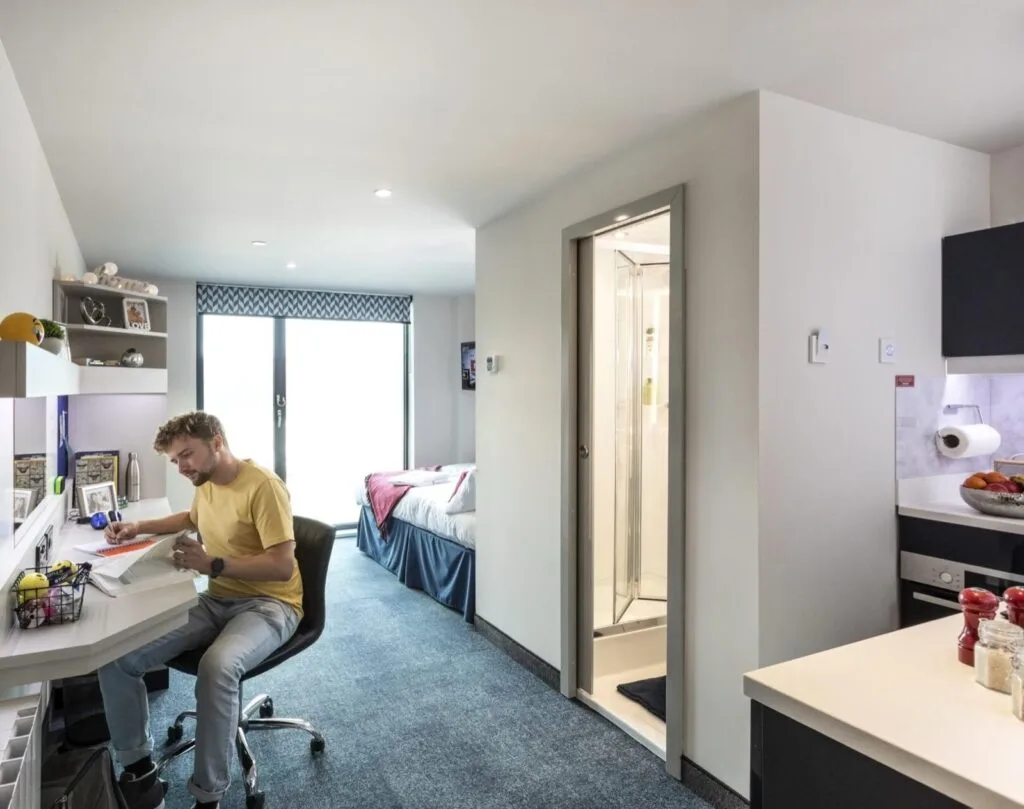
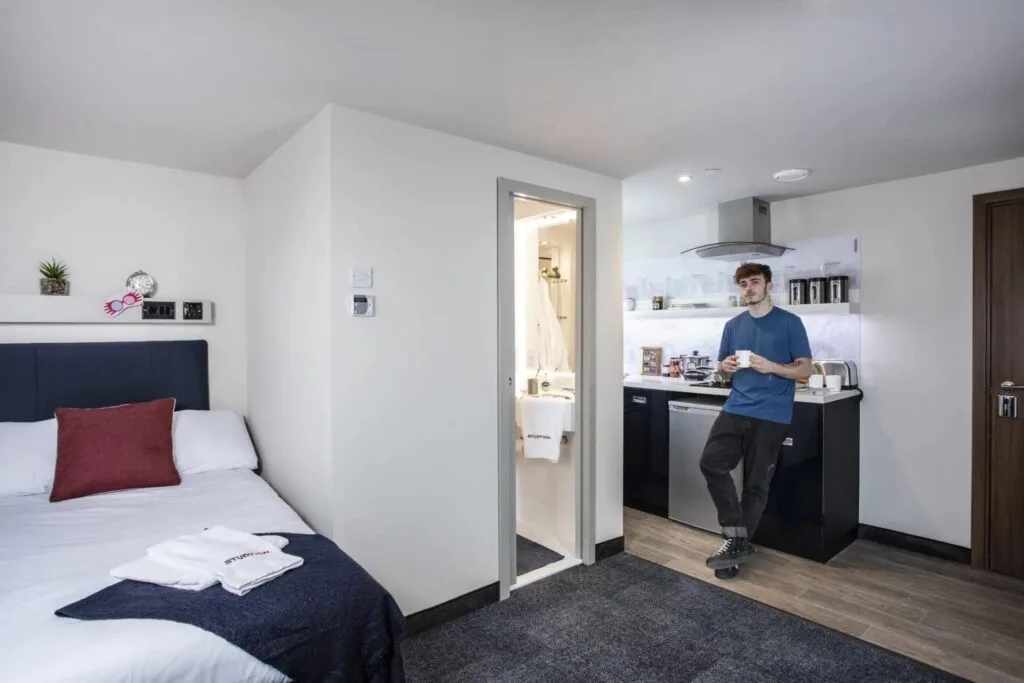
At Study Inn, for example, rooms are fully furnished with an en-suite shower room, and bedding, towels, kitchen utensils and a smart TV are all included. You will need to arrange your own contents insurance, and a TV licence if you want to watch live TV or BBC iPlayer. The Study Inn FAQ covers the details.
What to bring from home
The things that make a room feel like home are usually small and personal. Photos of family and friends are the obvious one. Your own pillow, or a throw or blanket you like, makes the bed feel familiar. A favourite mug, a few books, a game or something connected to a hobby all help.
If you are moving from another country, a few ingredients for a meal you grew up with can make a big difference on a homesick evening.
Keep it to what fits. A room packed with everything from home can feel cluttered rather than homely, and you will be moving it all out again at the end of the year. Our guide to preparing for your first year has more on deciding what you actually need.
Uni room ideas: decorating without damaging the walls
Most student accommodation has rules about what you can put on the walls, because tape, pins and hooks damage paint and plaster. Check your agreement before you start, as repairs can be charged to you.
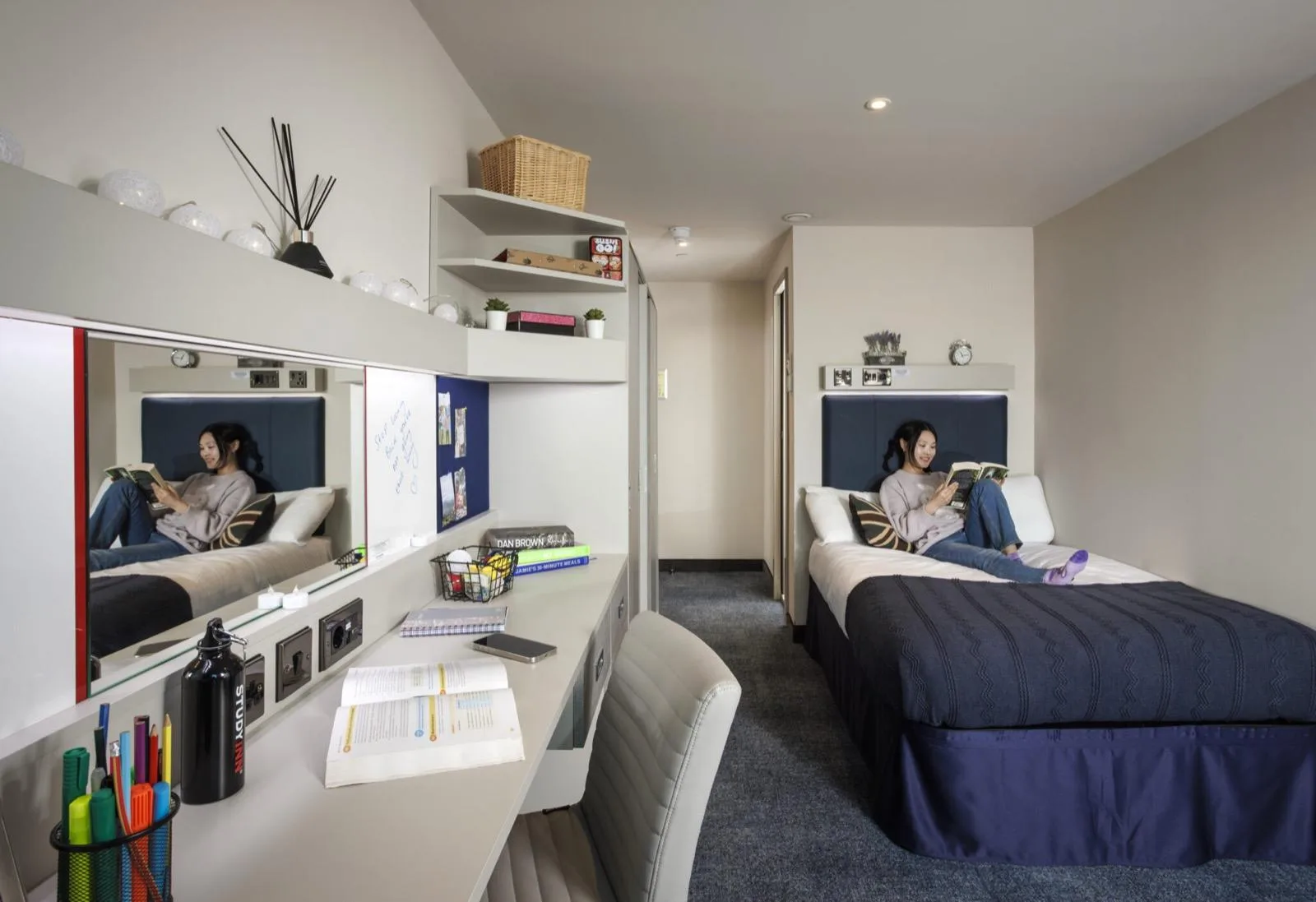
At Study Inn, each room has a whiteboard or pin board for photos, notes and postcards, and you can display photo frames next to your bed. Study Inn asks residents not to pin or stick anything to the walls.
That still leaves plenty of options. Fill the pin board with photos, tickets and postcards, and change them as the year goes on. Use freestanding frames on your desk and bedside table. Add a rug, cushions and a throw in colours you like, and bring bedding you have chosen yourself. A plant that is easy to look after adds a lot to a room for very little effort.
At Christmas, our article on getting your student room ready for Christmas has seasonal ideas.
Lighting, storage and comfort
Lighting changes how a room feels more than almost anything else. A desk or bedside lamp is much warmer in the evening than the main ceiling light. Some items are not allowed in student accommodation, mostly because of fire risk, so check the rules before you buy anything electrical or anything with a naked flame. At Study Inn, the list of items that are not allowed is on the Student Portal.
Storage makes a small room easier to live in. Under-bed boxes and a few hooks inside the wardrobe keep surfaces clear, and a clear desk is a much better place to work.
Keep the room comfortable to be in: open the window for a few minutes each day, keep on top of washing, and do not let dishes build up.
Routines that make a place feel like yours
A place starts to feel like home when things happen there regularly. Unpack fully in the first couple of days rather than living out of a suitcase, so the room is set up the way you want it.
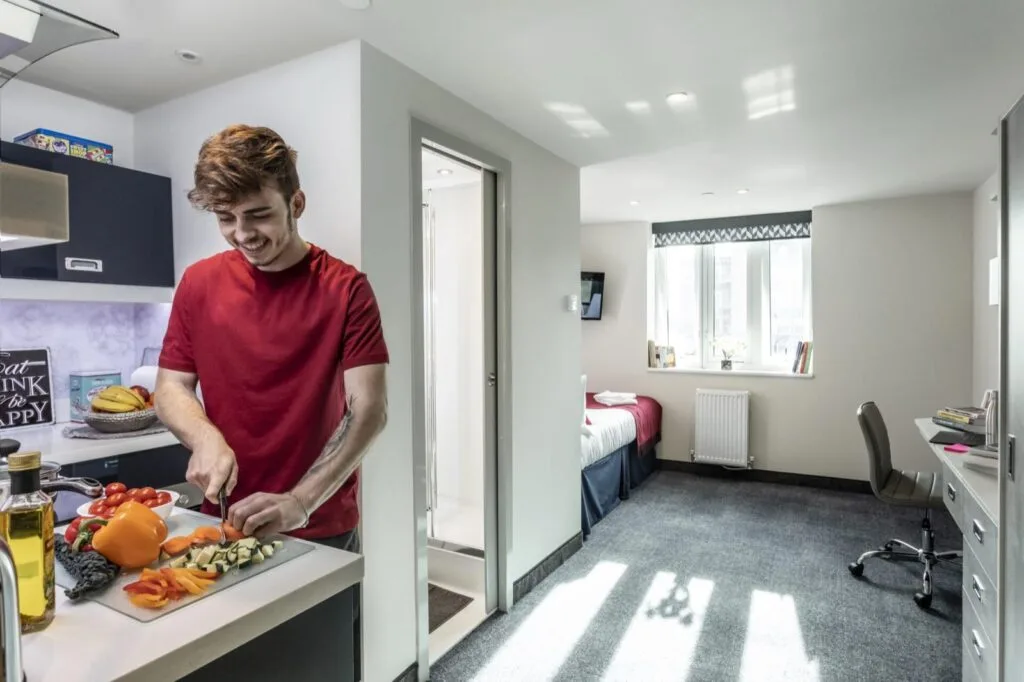
Then build a few simple routines. Make your bed in the morning. Have a set time each week for a call home. Cook a meal you grew up with at the weekend. Pick a day for laundry and a quick tidy. None of these takes long, but together they give the week a shape, and that is a large part of what makes somewhere feel like home.
Get to know your building and flatmates
The people around you matter as much as the room. Say hello in the kitchen and the shared spaces in the first few days, even if it feels awkward. Most people are in the same position and are glad someone spoke first.
If you share a flat, agree a few simple ground rules early on, such as how cleaning and shared food will work and when it is fine to be loud. It is much easier to agree these in week one than to sort out a disagreement in week eight.
Go to the events your building or university runs, especially early in the year. You do not have to stay long, but each one makes the building feel a little more familiar.
Get to know the area
Home is also the area around you. In your first week, find the nearest supermarket, a pharmacy, a café you like and a good route for a walk or a run. Learn the way to campus, and try more than one route.
Register with a GP near where you live as soon as you arrive. According to the NHS, you only need to give your name, date of birth and address, and you do not need ID or proof of address.

If you are moving to a city where Study Inn has a building, our guides to Leeds, Nottingham, Leicester, Exeter and things to do in Loughborough are a good place to start.
Feeling safe and settled
It is hard to relax somewhere you do not feel safe. Know how your building’s entry system works, keep your key or key card with you, lock your door when you go out, and arrange contents insurance for your belongings. Our article on student accommodation safety goes into more detail.
If something about your room is not right when you arrive, say so early. At Study Inn, if you want to change rooms after you check in, you can fill in a room swap form on the Student Portal, and Study Inn will try to match you with another student who also wants to swap.
Making yourself at home at Study Inn
Study Inn is set up so that you can concentrate on settling in rather than on admin. Accommodation is all-inclusive, covering electricity, water, heating and superfast Wi-Fi, and a regular cleaning service for your room and the communal areas is included. There is no damage deposit, as rooms are covered by a fair wear and tear policy, and no UK guarantor is required.
Security includes CCTV, a 24/7 onsite security team and key-card building entry, and the team is onsite 24 hours a day if you need anything. If you live in an en-suite apartment, you share a Luxe Lounge, with a kitchen and living area, with the other residents of your apartment. Buildings also have social spaces and run events throughout the year, which makes it easier to get to know the people you live with. Friends and family can visit too: residents can have one overnight guest aged over 18, with some extra terms that your Centre Manager can explain.
Study Inn was named Best Student Accommodation Operator at the RESI Awards 2026. You can see what is included in every room on the Study Inn student experience page.
Study Inn has buildings in Leeds (Brotherton House), Nottingham (Talbot Street and Triumph House), Leicester (Reynard House), Exeter (Walnut Gardens) and Loughborough (Lemyngton Street), and you can book a viewing to see the rooms for yourself.
Frequently Asked Questions
How can I make my student room feel more homely?
Bring a few personal things such as photos, your own pillow and a throw, add a lamp and some soft furnishings, and unpack fully in the first couple of days. Simple routines, like a weekly call home and cooking a familiar meal, also help a new room feel like yours.
Can I put posters up in student accommodation?
It depends on your accommodation’s rules, as many do not allow tape, pins or hooks on the walls. Check your agreement first. At Study Inn, rooms have a pin board or whiteboard for photos and posters, and residents are asked not to pin or stick anything to the walls.
What should I bring to make my uni room feel like home?
Photos, your own pillow or a favourite blanket, a mug you like, a few books and something connected to a hobby. Check what your room already includes first, so you do not bring things you will not need.
How long does it take to settle into student accommodation?
It varies from person to person. Many students find it gets easier once they have unpacked, set up a routine and got to know a few people in their building. If you still feel unsettled after several weeks, talk to your accommodation team or your university’s wellbeing service.
Can I decorate my room at Study Inn?
Yes, within the rules. Each room has a whiteboard or pin board, and you can display photo frames next to your bed. Study Inn asks residents not to pin or stick anything to the walls, and some items are not allowed because of fire risk, so check the list on the Student Portal before you buy anything.